
JNV Class 6 Entrance Exam 2027: Best Books, Syllabus, Exam Pattern and Preparation Tips

Preparing for the Jawahar Navodaya Vidyalaya Selection Test also known as JNVST is a step for students who want to gain admission to Class 6 in a Jawahar Navodaya Vidyalaya. For families the first question is simple: which book should the child study and how should the preparation begin?
A good JNV Class 6 entrance exam book 2027 should explain topics clearly provide practice questions and help students become familiar with the real examination pattern. A good JNV Class 6 entrance exam book 2027 should also follow the syllabus because relying only on an older edition can leave students unprepared for changes in the exam.
For the 2027 admission cycle the published pattern includes Environmental Studies (EVS) with Mental Ability, Arithmetic and Language. The inclusion of EVS alongside Mental Ability, Arithmetic and Language makes it especially important to check the contents of a book before choosing it.
In this guide you will find the JNVST Class 6 syllabus, the exam pattern, advice on choosing the right Navodaya entrance exam book 2027 and practical preparation tips for students and parents.
JNVST Class 6 Entrance Exam 2027: Important Details
The Jawahar Navodaya Vidyalaya Selection Test is conducted by Navodaya Vidyalaya Samiti (NVS). The Jawahar Navodaya Vidyalaya Selection Test selects students for admission to Class 6 in Jawahar Navodaya Vidyalayas across India.
Here are the key details, for the 2027–28 admission session.
|
Particular |
Details |
|
Examination |
Jawahar Navodaya Vidyalaya Selection Test (JNVST) |
|
Admission class |
Class 6 |
|
Academic session |
2027–28 |
|
Conducting body |
Navodaya Vidyalaya Samiti |
|
Examination date |
28 November 2026 |
|
Examination mode |
Offline, OMR-based |
|
Total questions |
80 |
|
Total marks |
100 |
|
Duration |
2 hours |
|
Test areas |
Mental Ability, Environmental Studies, Arithmetic and Language |
|
Official website |
The application deadline for this admission cycle was 31 July 2026. Students who have registered must keep checking the NVS website and admission portal for updates about the admit card and examination instructions.
For the official information, visit the NVS admission portal.
JNVST Class 6 Exam Pattern 2027
Before buying books or preparing a timetable students must understand how the examination is organised.
The JNVST 2027 paper contains 80 questions for a total of 100 marks. The Mental Ability and EVS sections together contain 40 questions. Carry 50 marks.
|
Section |
Questions |
Marks |
Duration |
|
Mental Ability Test (MAT) |
20 |
25 |
Combined 60 minutes |
|
Environmental Studies (EVS) |
20 |
25 |
Combined 60 minutes |
|
Arithmetic Test |
20 |
25 |
30 minutes |
|
Language Test |
20 |
25 |
30 minutes |
|
Total |
80 |
100 |
120 minutes |
The 60 minutes shown for MAT and EVS is the duration for those two sections, not 60 minutes for each one.
Each correct answer carries 1.25 marks. There is no marking for incorrect answers under the published pattern. Students should nevertheless read the instructions on the question paper and OMR sheet carefully.
The prospectus also specifies qualifying marks for the sections. Students should check the document for these requirements rather than assuming that a high overall score alone guarantees selection.
JNV Class 6 Entrance Exam Book 2027: How to Choose the Right One
Choosing a book is not simply about finding the guide or the one with the most questions. The right book must suit the students level. Cover the syllabus prescribed for the current examination.
Here are a few things parents and students should check before buying a JNVST Class 6 book 2027.
1. Check the latest syllabus
This should come first. The 2027 pattern includes Mental Ability, EVS, Arithmetic and Language. A book based entirely on the older pattern may not cover all the required areas.
Look through the contents page before ordering. Check whether EVS is included and whether the practice material follows the examination structure.
2. Look for explanations
Students preparing for an entrance exam while studying in Class 5 need explanations they can understand independently. The book should show how to solve a question not just provide the option.
This is especially helpful in Arithmetic and Mental Ability, where understanding the method makes it easier to solve questions.
3. Choose a book with practice
After learning a topic students need questions to check their understanding. The guide includes topic‑wise exercises, mixed practice and tests that help students work within a time limit.
4. Check the answer key and solutions
Answer keys are useful but explanations are even better. When the student makes a mistake a worked solution helps the student understand what went wrong and how to approach a question next time.
5. Practise with OMR sheets
JNVST is conducted offline using an OMR sheet. Students should practise marking the option neatly and checking that the question number matches the answer the student is marking.
6. Select the right language edition
Choose a book in a language the student can comfortably read. If the student understands the question clearly the student can focus on solving it of struggling with the wording.
Best Books for JNV Class 6 Preparation
Students do not need to collect a number of books to prepare well. It is usually more practical to choose one guide add suitable practice material and use school textbooks to revise basic concepts.
1. A complete JNV Class 6 entrance exam guide
A main preparation guide should cover the syllabus explain concepts provide solved examples and include exercises for regular practice.
If the student is choosing a JNV Class 6 entrance exam book 2027 from Radian Books the student should check the edition carefully. The book should cover the syllabus, including EVS, as well as Mental Ability, Arithmetic and Language.
Do not assume that the book is fully updated just because the year appears on its cover. The student should compare its contents with the official prospectus before using it as the students main preparation resource.
2. JNV Class 6 practice set books
Practice sets help the student apply what the student has learned and become familiar with exam‑style questions. Practice sets are particularly useful after the basic concepts have been covered.
For practice the student can explore these Radian Books resources:
- JNV Class 6 Practice Set Book 2027 – English Medium: Includes 30 practice sets and a solved paper.
- JNV Class 6 Practice Set 2027 – Hindi Medium: A practice resource for students preparing in Hindi.
Before relying on either book as the preparation resource the student should check whether its contents include the revised EVS section. A practice book can still be useful for the topics it covers. It should not be treated as complete if a section is missing.
3. Environmental Studies books
Since EVS is included in the published JNVST 2027 pattern, students should make time for this section rather than concentrating only on Mental Ability and Arithmetic.
Radian Books offers the following EVS resources:
- Environmental Studies (EVS) Book for JNVST Class 6 Entrance Exam 2027 – English Medium
- Paryavaran Adhyayan EVS Book for JNV Class 6 Entrance Exam 2027 – Hindi Medium
These resources can help the student revise EVS topics and practise questions in the students preferred language.
4. Class 5 school textbooks
School textbooks are still useful, for strengthening Mathematics, reading comprehension and environmental knowledge. The student can use them to revise concepts that the student finds difficult in the entrance‑exam guide.
The goal is to understand the basics and then practice applying them to entrance‑test questions.
5. Sample OMR sheets and timed tests
Timed tests help students understand how to manage the two‑hour examination. OMR practice also gives students a chance to get used to marking answers
Start with practice while learning a topic. Once the student is comfortable with the questions introduce timed tests gradually.
JNVST Class 6 Syllabus 2027: Subject-wise Breakdown
Knowing the syllabus helps students divide preparation into parts. Of trying to study everything at once students can work on one subject and one topic at a time.
1. Mental Ability Test (MAT)
The Mental Ability Test checks a students ability to recognise patterns compare figures and identify relationships. Many questions use pictures or shapes careful observation is important.
The published 2027 syllabus includes areas such as:
- Pattern completion
- Figure matching
- Figure series completion
- Geometrical figure completion
- Mirror and water images
- Embedded figures
Students should practice identifying what changes between figures, such as direction, position, shape or sequence. Students should also learn to eliminate options that do not follow the pattern.
Preparation tip: Start with a questions from each type. Once the student understands the method increase the difficulty and practice under a time limit. Reviewing answers is just as important as solving new ones.
For additional practice, students can use the General Intelligence & Reasoning 2025 English Revised Edition for AISSEE and JNV preparation.
Hindi-medium students may also refer to the Baudhik Parikshan General Intelligence & Reasoning Guide Hindi 2025–2026 Revised Edition.
2. Environmental Studies (EVS)
EVS is included in the published JNVST 2027 pattern. It tests students basic understanding of their surroundings, science, the natural world and general environmental knowledge.
The topics listed in the published syllabus include the following areas.
The natural world
- Transportation
- Rivers and mountains
- Plants and animals on land and in water
- Natural disasters
- Houses and shelters
- The water cycle
The human body
- Food and nutrients
- Hygiene and cleanliness
- Super senses
- Basic knowledge of the digestive, circulatory and respiratory systems
Science and the environment
- Food preservation
- Water and air pollution
- Conservation of water and soil
Social surroundings
- States and capitals
- National symbols
- Important geographical features of India
- Festivals and seasons
- Forests and crops
- Clothes and fibres
- Common facts about India
Students should not treat EVS as a list of facts to memorise. Using examples can make these topics easier for students to remember.
Preparation tip: Review the school lessons make short notes and practise questions after each topic. For facts that students find easy to confuse use revision lists and revisit them regularly.
3. Arithmetic Test
Arithmetic checks whether students can apply mathematical concepts accurately. The 2027 prospectus should be used as the reference for the exact subjects included in the current test.
Key preparation areas include:
· Number operations
· Factors and multiples
· Fractions
· Decimals only if included in the applicable official syllabus or the chosen practice resource's clearly labelled supplementary material
· Simplification
· Percentage and proportion where prescribed
· Measurement and practical mathematical problems
· Questions involving time, distance or other everyday calculations where prescribed
Arithmetic checks whether students can use mathematical concepts to solve problems accurately. Students should first make sure students understand the topics before focusing on speed.
Use the 2027 prospectus as the final reference for the exact Arithmetic syllabus. Preparation resources may contain topics for general practice so not every topic in an older guide should automatically be treated as part of the current test.
For additional Mathematics practice, students may refer to:
Use these resources to strengthen basic concepts while following the official JNVST syllabus for the current examination.
Preparation tip: Encourage the student to write down the steps used to solve a problem. When an answer is incorrect check whether the mistake came from misunderstanding the question choosing the method or making a calculation error.
4. Language Test
The Language Test focuses on reading comprehension. Students need to understand a passage identify details and choose answers that match the information provided.
The published syllabus describes four reading passages, each followed by five questions.
Students should practise:
- Reading a passage carefully
- Identifying its main idea
- Finding specific information
- Understanding the meaning of words from context
- Reading questions before selecting answers
- Checking answers against the passage
Preparation tip: Give the students a passage to read and ask the students to explain it in their own words. The students can then answer the questions without looking at the answer key. This builds understanding. Helps the students avoid choosing answers based on guesswork.
Grammar practice can also help students strengthen their understanding of sentences and language:
English grammar
Radian Basic English Grammar – Fully Solved Reference Book for All Competitive Exams
Hindi grammar
Reading comprehension and unseen passages
These books can provide practice in grammar and comprehension. Since the JNVST Language Test is based on reading comprehension students should prioritise passage-based questions. Check that the students’ chosen resources match the students’ language and preparation needs.
How to Prepare for the JNV Class 6 Entrance Exam 2027
A student preparing for the JNVST is usually busy with schoolwork, homework and other activities. A good preparation plan should fit into that routine so that every day feels like a step closer to the exam.
Here are some practical steps students and parents can follow.
Step 1: Make a syllabus checklist
Write down the subjects and topics from the prospectus. Mark each topic as not started, in progress or revised.
This helps students see what they have covered and what still needs attention.
Step 2: Learn the basics before attempting questions
Use the study book to understand a topic. Work through the examples then try questions without looking at the answers.
If a topic is difficult go back to the explanation of moving to a harder exercise.
Step 3: Give attention to all four test areas
Mental Ability, EVS, Arithmetic and Language are all part of the exam pattern. Do not spend all your time on one subject just because it feels easier or more interesting.
Regular practice in all four areas helps students find spots early.
Step 4: Keep a notebook of mistakes
When a student gets a question wrong write down the topic and the reason for the mistake. Go back to these questions every day.
This helps spot patterns. For example, the student may understand a math concept. Keep making calculation errors. They may understand a passage but miss an important detail.
Step 5: Start timed practice gradually
Once the student feels comfortable with the topics begin solving practice papers within a time limit.
After each test review the answers of just looking at the score. The goal is to find what needs work before the real exam.
Step 6: Revise what has already been studied
In the weeks before the exam go back to notes, tough questions and errors from tests.
Avoid changing the study plan at the moment. A steady routine works better than trying to learn topics in a short time.
A Simple Weekly Study Plan for JNVST
This is one-way students can organize their study time. Parents can adjust it based on school hours and the child’s learning needs.
|
Day |
Main practice |
Additional revision |
|
Monday |
Mental Ability |
Review incorrect answers |
|
Tuesday |
Arithmetic |
Practise calculations |
|
Wednesday |
EVS |
Revise facts and concepts |
|
Thursday |
Language |
Read and answer a passage |
|
Friday |
Mental Ability and Arithmetic |
Solve mixed questions |
|
Saturday |
EVS and Language |
Revise difficult topics |
|
Sunday |
Timed practice paper |
Check answers and review mistakes |
Short focused sessions are easier to stick to than study hours. Make sure the student also gets rest and time for schoolwork.
Common Mistakes to Avoid During Navodaya Preparation
Some mistakes can make preparation harder than it needs to be.
Using a book: Check if the book covers the current syllabus, especially Environmental Studies.
Ignoring a subject: Each section carries marks. Skipping one leaves gaps in preparation.
Solving questions without checking mistakes: Practice works best when students understand why an answer was wrong.
Memorising answers of methods: Understanding the method helps students handle questions.
Ignoring OMR practice: Students should learn to mark answers carefully and make sure the question number matches the answer.
Using only mock tests: Practice papers help track progress but students still need to understand the concepts behind the questions.
Why the Right Navodaya Entrance Exam Book 2027 Matters
The right study material gives students a way to go through the syllabus. They can learn a concept solve questions and check their progress without jumping between unrelated books.
For parents a organised book makes it easier to follow the child’s progress. Chapter-wise exercises show what has been covered and practice tests help find topics that need revision.
When choosing JNV Class 6 preparation books look beyond the cover. The number of pages. Check the syllabus, explanations answer keys, practice sets and whether the book includes the EVS section.
Radian Books offers JNV Class 6 guides, practice sets and specific resources. Compare the contents of each book with the JNVST 2027 prospectus before deciding which ones to use.
Final Thoughts
Preparing for JNVST becomes easier when students know what to study and have a routine they can follow. Start with the syllabus choose a suitable JNV Class 6 entrance exam book 2027 practice each section and review mistakes regularly.
Pay attention to the revised exam pattern when picking study material. A book based on a syllabus may help with some topics but it should not be used as a full preparation resource unless it includes the current requirements.
With practice careful revision and the right study material students can build their understanding and face the entrance test with more confidence.
Frequently Asked Questions
1. Which is the JNV Class 6 entrance exam book 2027?
Choose a book that follows the JNVST syllabus explains concepts clearly and has enough practice questions with answers. Make sure it covers Mental Ability, EVS, Arithmetic and Language.
2. Has the JNVST Class 6 syllabus changed for 2027?
Yes. The 2027 pattern includes Environmental Studies along with Mental Ability, Arithmetic and Language. Students should check their books carefully. Not rely only on older editions.
3. How many questions are there in the JNVST Class 6 exam 2027?
The exam has 80 questions worth 100 marks. The total time is two hours.
4. Is there negative marking in JNVST Class 6 2027?
No there is no marking for incorrect answers. Candidates must follow all instructions in the official prospectus and on the exam paper.
5. Can students prepare for JNVST using school textbooks?
Yes. School textbooks can help with Maths, reading comprehension and basic environmental knowledge. A dedicated entrance exam guide gives topic- practice and helps students get used to the exam format.
6. Are previous-year papers useful for JNVST 2027?
Yes. Previous-year papers help students understand question styles and practice time management. Older papers may follow a different syllabus so use them with updated study material.
7. When is the JNVST Class 6 entrance exam 2027?
The exam is scheduled for 28 November 2026 for admission, to the academic session. Check the NVS website for updates.
8. Where can I check the JNVST 2027 syllabus?
Visit navodaya.gov.in or the NVS admission portal Read the prospectus for the 2027–28 admission cycle.
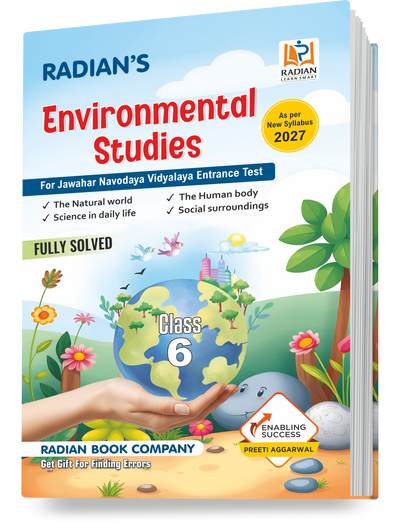
Environmental Studies (EVS) Book for JNVST Class 6 Entrance Exam 2027 | Fully Solved | English Medium
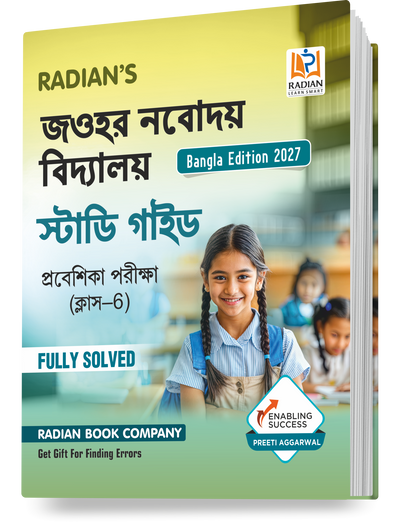
Jawahar Navodaya Vidyalaya Class 6 Entrance Exam Guide Book 2027 (Bengali Medium)

Jawahar Navodaya Vidyalaya Class 6 Entrance Exam Guide Book 2027 (English Medium)
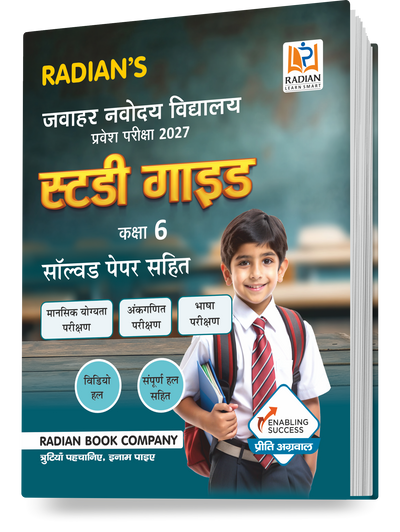
Jawahar Navodaya Vidyalaya Class 6 Entrance Exam Guide Book 2027 (Hindi Medium)
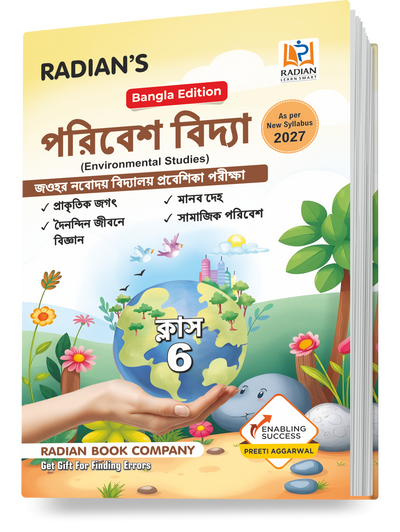
JNV Class 6 EVS Book 2027 Bengali | Fully Solved

JNV Class 6 EVS Book 2027 Marathi | Fully Solved
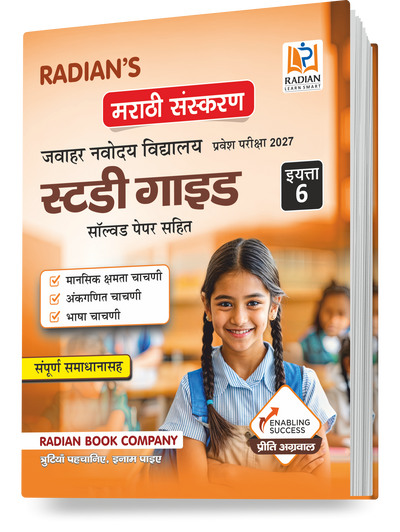
JNV Class 6 Guide Book Marathi Medium Entrance 2027 | Solved Papers
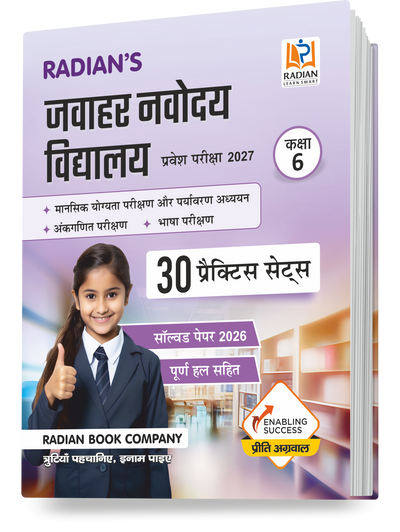
JNV Class 6 Practice Set 2027 Hindi | Based on Latest Updated Syllabus
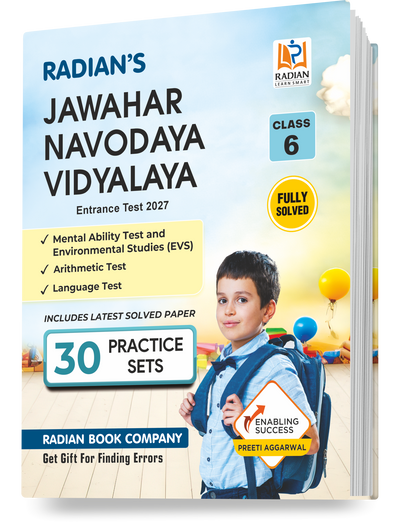
JNV Class 6 Practice Set Book 2027 (English) | 30 Practice Sets & Solved Paper
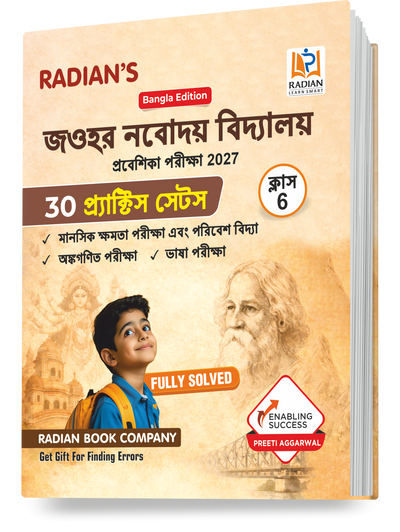
JNV Class 6 Practice Set Book 2027 Bengali Medium | 30 Sets
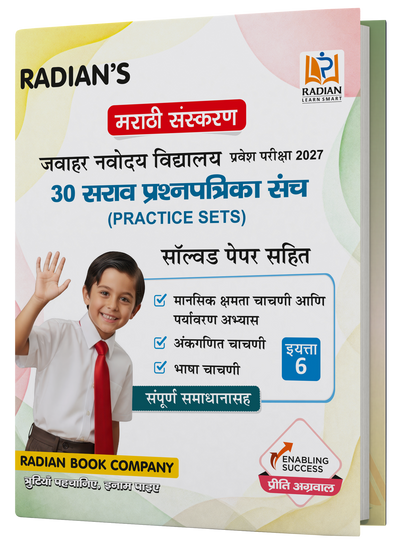
JNV Class 6 Practice Set Book 2027 Marathi Medium | 30 Sets
