
How to Choose the Best Books for Competitive Exams in India

Whether shopping at a store or browsing through search results, you are likely to stumble upon dozens of books for almost every subject. Some claim to cover everything, while others promise to provide thousands of questions, and yet others assure that one book is sufficient for multiple examinations. For someone balancing studies with other activities, deciding which books to buy can prove to be a challenge.
The truth is that the most appropriate books rarely promise to be the best-seller or contain everything under the sun. They should be selected keeping in mind the targeted exam, explain concepts at an adequate level, and provide sufficient practice for identifying weak areas.
how to choose books for competitive exam preparation, If you are at a loss about choosing the right books for competitive exams, consider these pointers:
1. Start With the Exam, Not the Book
It is easy to get tempted by a popular book or search results featuring multiple options, but a book that has been recommended for one examination may not be relevant for another.
First, identify the targeted examination and the syllabus. Visit the official website and review the latest notification and syllabus document.
For instance, the Staff Selection Commission publishes syllabi for various posts on its website.
Shortlist subjects and topics for preparation and cross-verify them with the table of contents of the desired book. It will give a good idea about whether the book is relevant for the intended examination.
Remember: choose a book according to its syllabus and not its name.
2. Decide What You Need the Book For
Not every learner has the same requirement. Before visiting a store or browsing through book listings, decide what your primary need is. For instance, categorise books into the following broad types:
|
Type of book |
Best suited for |
|
Subject-wise book |
Learning concepts and strengthening a particular subject |
|
Complete exam guide |
Learning various subjects using one book |
|
Previous-year question book |
Getting familiar with question formats and common topics |
|
Practice-set book |
Assessing one’s preparation with timed questions |
|
Grammar or maths reference book |
Strengthening a weak area |
|
General knowledge book |
Revising general knowledge and static topics |
Each book has a specific purpose. A comprehensive guide can be a one-stop solution for most subjects, while a separate reasoning book can offer extra practice if that happens to be a weak area.
It is unnecessary to buy every type of book at once; start with what seems to be the most pressing need and add others later if required.
3. Understand the Syllabus Coverage Before Paying
While a book’s cover page may list multiple examinations, it is essential to ensure that the topics covered are relevant to the targeted examination. Cross-verify the table of contents with the syllabus to ensure that no significant topics have been missed out.
Moreover, check whether the book contains the required subjects, subtopics, type of questions, and difficulty level. Simultaneously, evaluate the explanation provided in case of doubts.
A book with 500 questions may not be as useful as a book with 100 questions and detailed answers if the objective is to learn concepts. However, for general studies and school-level topics, NCERT books can be extremely helpful for competitive exam preparation. Nevertheless, for recruitment examinations, relying only on school-level books may not be sufficient.
If the syllabus has been updated, check the publication date and ensure that the edition mentioned in the book includes the latest changes. A book published years ago may still be useful for fundamental topics, but the current-affairs section and exam-specific information may be outdated.
4. Look Beyond the Number of Questions
While the number of questions in a book can be a good indicator of the extent of practice, it is essential to evaluate certain other factors before buying a book, especially for government exam preparation.
These include:
- Explanations: Can the learner understand why a particular option is correct or incorrect?
- Variety: Does the book contain a mix of easy, moderate, and difficult questions?
- Previous papers: Are the previous question papers mentioned, and are they relevant for the intended examination?
- Practice: Does the book contain topic-wise questions, mixed-topic questions, and complete tests?
Some books offer practice questions without detailed explanations, and such books are best avoided while preparing for competitive examinations, unless the learner is already proficient with the underlying concepts. After gaining a good command of a subject, practice books with questions can be used for revision.
Previous examinations papers help the learner understand the pattern followed by the recruiting agency. Wherever possible, compare the given papers with the official question paper to identify discrepancies.
However, it is necessary to remember that previous papers can only be a guiding aid, and there is no guarantee that the same questions will appear again.
5. Pick a Book with Easy-to-Understand Language
A book is as good as the explanations provided. Some learners find it easier to understand Hindi, whereas others prefer studying in English. Ideally, the language should be picked according to one’s comfort, and not everyone is comfortable with the same language.
Moreover, for some examinations, question papers may also be provided in multiple languages; therefore, it is essential to review the official notification before finalising the language of the book.
The writing style is also important, particularly for math and reasoning books. For these types of books, detailed explanations are more important than answers; therefore, it is essential to go through samples before buying a book.
For general knowledge books, headings, tables, and other visual tools can facilitate easier revision. If the book is being bought online, the product listing can be used to review the language, edition, authors, number of pages, and subjects covered to ensure that it is a good fit.
6. Do Not Overlook the Publication Date
A book published years ago may not be as relevant as one published recently, but not all topics change with time. Arithmetic operations, grammar rules, and certain reasoning topics are likely to remain the same, while current affairs, notifications, and facts may change.
Therefore, do not choose a book solely on the basis of the most recent publication date. Simultaneously, ensure that the publication date is not too old; ideally, the book should be updated according to the syllabus and current affairs.
For examination-specific rules and notifications, always refer to the latest notification from the official website. In short, while choosing books for competitive exams, do not get misled by the cover page. Prioritise accuracy and relevance over flashy advertisements and misleading claims.
7. Make a Competitive Exam Books List According to Your Requirement
Most candidates tend to buy too many books but end up studying only a few. They also tend to shift from one guidebook to another without completing a single book. As a result, it becomes difficult to retain studied material and revise it.
Instead, create a shortlist of competitive exam books according to one’s specific requirements.
A tentative list can contain:
- One main guidebook: for comprehensive subject coverage.
- One subject-specific book: for additional practice.
- One publication containing: previous-year question papers and practice sets.
- Notifications and syllabus documents: for referring to the latest updates.
It is also possible that the guidebook already contains sufficient question papers and solved examples; therefore, it is essential to evaluate the requirement before adding any book to the books list.
Radian Books has a wide range of general books collection.to suit various requirements. Shortlist according to the subjects and relevant examinations before evaluating the product listing.
8. Match Books to Your Preparation Level
Ideally, one should not use the same book to prepare for the basics and revise before the examination. It is better to pick separate books for these purposes because different stages of preparation require different types of practice.
When new to the subject: Choose a guidebook that explains concepts clearly and follows a logical sequence. Give oneself enough time to grasp the fundamental ideas before attempting to solve questions.
When basics are clear: Add topic-wise question books and previous papers for additional practice. Focus on the questions attempted incorrectly, and revisit the relevant chapters.
When preparing for revision: Use short notes, highlighted questions, formula lists, and timed practice sets. A new guidebook may not always be helpful when time is limited, and there already are sufficient materials for revision.
In this way, books can be matched to one’s preparation level to ensure that nothing is wasted on materials that are either too difficult or unnecessary at a given stage.
9. A Few Things to Remember While Buying Books
Before finalising a purchase, go through this checklist:
- Checklist Yes No Does the book match the targeted examination?
- Is the language comfortable to read?
- Are explanations and answer keys clear?
- Does the book provide adequate practice?
- Is the edition relevant to the current syllabus?
- Have you reviewed the contents and product listing?
- Do you already have another book with similar contents?
If most of the pointers have been ticked, the book can be considered a good fit. If not, it is best to skip the book instead of buying it only because it seems interesting or has been recommended by others.
Final Thoughts
Choosing the right books for competitive examination is a practical exercise, not a popularity contest. Always start with the syllabus and use books that explain the required concepts clearly. Practice with previous papers, and keep the books list concise so that sufficient time can be spent on each book.
Ultimately, the best competitive exam books are those that meet individual requirements, and not every learner has the same need. Therefore, choose carefully, use the books as intended, and update the books list as and when necessary.
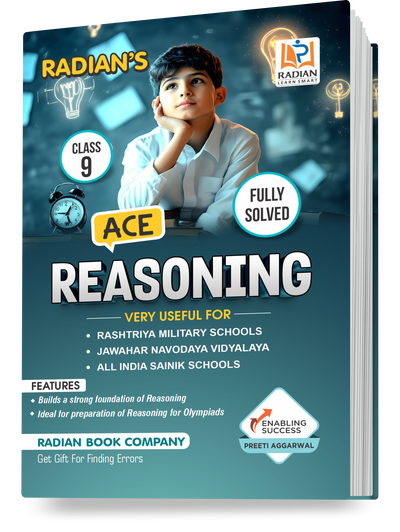
Ace Reasoning Book Class 9 | Entrance Exams 2026 Sainik School, JNV, RMS & Other Comptetive Exams
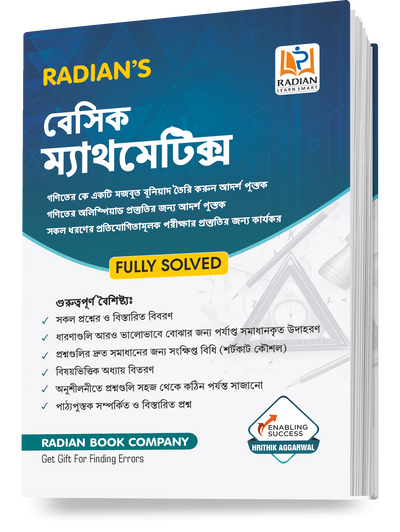
Basic Mathematics Guide Book 2026 | JNV, Sainik School, RMS & other Competitive Exams in Bengali
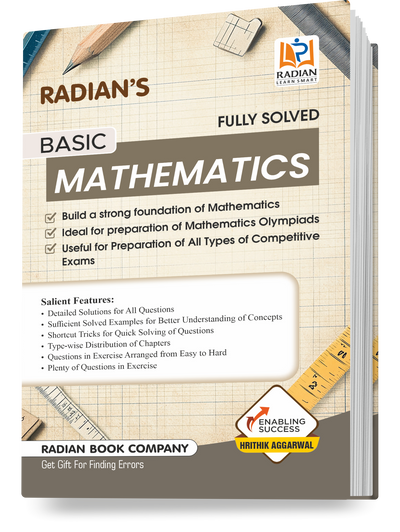
Basic Mathematics Guide Book for Class 5-8 (English) | 2025 Revised Edition | AISSEE, JNV & RMS
