Best Reasoning Books for Competitive Exams: Verbal, Non-Verbal and Logical Reasoning

A reasoning question can look simple until you start solving it under a time limit. You may understand the pattern but take too long to find the answer. Sometimes, the method is clear, yet two options seem equally correct. These are common problems for students preparing for SSC, Railway, Banking, Police and other government recruitment exams.
The right book can help you work through these difficulties. Instead of memorising shortcuts, you learn how a question works, practise different patterns and understand where you are losing time.
However, choosing the best reasoning book for competitive exams depends on your current level, preferred language and target examination. Some students need a complete guide with explanations, while others are ready for chapter-wise practice. This guide looks at the differences between reasoning books and how to choose one that fits your preparation.
What Should a Good Reasoning Book Cover?
Before buying a book, check whether it covers the topics mentioned in your target exam's syllabus. Reasoning is a broad subject, and a book focused only on puzzles may leave gaps in your preparation.
A useful reasoning book should cover three main areas.
Verbal Reasoning: These questions use words, letters, numbers or relationships. Common topics include analogy, classification, coding-decoding, blood relations, direction sense, ranking, series, syllogism and statement-based questions.
Non-Verbal Reasoning: These questions use figures, shapes and visual patterns. You may need to identify a missing figure, find a pattern, solve mirror-image questions or work through paper folding, embedded figures and figure series.
Logical and Analytical Reasoning: This area tests how you interpret information and reach a conclusion. Depending on the examination, it may include seating arrangements, puzzles, statements and conclusions, assumptions, cause and effect, and data sufficiency.
Not every recruitment exam includes every topic. The Staff Selection Commission's official syllabi, for example, list verbal and non-verbal reasoning areas such as analogy, coding-decoding, spatial visualisation, series and problem-solving. Candidates should check the latest notification for their particular examination before making a study plan. SSC official syllabus.
Four Radian Books to Consider for Reasoning Preparation
Instead of buying several books that repeat the same questions, decide what you need help with first. The following Radian Books titles serve different preparation needs.
1. Reasoning Book (RFC): Verbal, Non-Verbal and Logical Reasoning
Best for: Students who want a broad reasoning guide in English.
The Best reasoning book for competitive exams from Radian Books is an English-medium guide covering verbal, non-verbal, logical, analytical and mathematical reasoning. It is designed for candidates preparing for SSC, Banking, Railway and other competitive examinations.
The book has 552 pages and follows a chapter-wise approach. Concepts are introduced with examples before students move on to practice questions. This arrangement can be useful if you are still learning some topics and want to practise them in the same book.
Its coverage includes analogy, classification, series, coding-decoding, blood relations, direction sense, syllogism, seating arrangements, puzzles, figure-based questions and other common reasoning areas.
Why consider it? It brings several reasoning topics together, making it a practical option for students who do not want to switch between separate books for every section.
2. Samanya Buddhi Evam Tarkshakti 2025 — Hindi Medium
Best for: Students who understand reasoning concepts more comfortably in Hindi.
English explanations are not the best fit for every learner. If you prefer studying in Hindi, the Samanya Buddhi Evam Tarkshakti Reasoning Guide covers verbal, non-verbal and logical reasoning in one volume.
The 456-page book includes chapter-wise theory, solved examples, practice questions and QR-based video solutions. These videos offer another way to understand a question when the printed explanation does not make the method clear.
Topics include analogy, classification, series, coding-decoding, blood relations, ranking, direction sense, puzzles, syllogism, mirror images and paper folding.
Why consider it? It gives Hindi-medium learners a structured route from basic concepts to exam-style practice. The video explanations may also be helpful for self-study.
One detail to check before ordering: this product is listed as the 2025 edition, so review the product page and compare its coverage with the latest notification for your examination.
View the Hindi Reasoning Guide.
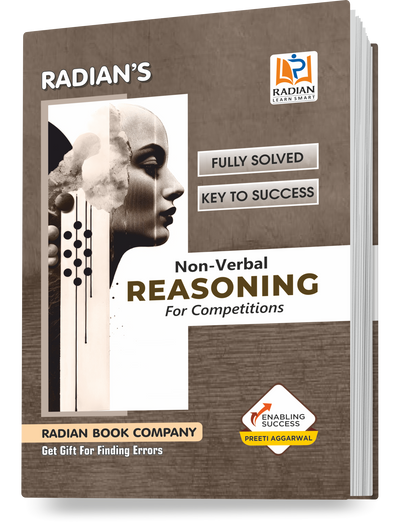
3. Non-Verbal Reasoning Chapter-Wise Book 2025
Best for: Candidates who need extra practice with figures and visual patterns.
Some students find coding-decoding questions easy, but struggle with figure completion, paper folding or embedded figures. In this scenario, a dedicated non-verbal reasoning book can prove more helpful than another guide.
Radian Books' Non-Verbal Reasoning Chapter-Wise Book is a 432-page English-medium book of fully solved questions arranged by topic. Its listed coverage includes figure-based reasoning and other visual question types used in competitive examinations.
Why consider this guide? You can spend more time on your weak area instead of re-practising topics you know well.
This is a specialised book and not a guide to all verbal and logical reasoning types. Combine with a broader book if your exam tests everything.
4. SSC Reasoning Topic-Wise Practice Set Book 2025 — English Medium
Best for: SSC aspirants who are familiar with the basics, but need more questions.
Reading the explanation is one thing, but solving questions without first reading the method is another. The SSC Reasoning Topic-Wise Practice Set Book covers this area.
The 224-page book includes over 4,000 questions like previous-year questions and has topic-wise practice plus solutions. Listed topics include analogy, classification, coding-decoding, blood relations, direction sense, series, syllogism, puzzles, seating arrangements and non-verbal reasoning.
This book is intended for SSC examinations such as CGL, CHSL, CPO, MTS and GD Constable, among others.
Why consider this book? You can choose which chapter to solve, then review mistakes without spending the whole learning session on theory.
Start with a concept-based book if you're new to reasoning. A practice book proves more useful if you know the basic rules already.
See the SSC Reasoning Practice Book.
Which Reasoning Book Should You Choose?
Use your preparation level to narrow down the options.
- You are new to this: Go for a complete guide with simple explanations and solved examples.
- You prefer Hindi: Go for a Hindi-medium book and ensure its explanations align with your learning preferences.
- Figures are your weak point: Add a dedicated non-verbal reasoning book to your study routine.
- You understand the concepts but make mistakes: Use a chapter-wise question book and detailed solutions.
- You are preparing for SSC: Ensure that the book covers your exam's relevant topics, then use previous-year questions to understand the question style.
You don't need all four books at once. One good guide and a practice resource can be enough to get you started. Add another book only if you see a gap in your learning.
Final Thoughts
The best reasoning book is the one that fits your exam and provides the practice you need. A complete guide can help you understand verbal, non-verbal and logical reasoning, while a specialised book can fill gaps in your knowledge of a specific area. Practice sets become useful when you understand the concept.
Before buying a book, compare its language, topics, explanations and edition with your target exam's latest syllabus. You can then choose a resource that fits your preparation needs, rather than buying books just because they're popular.
Browse through Radian Books reasoning collection to compare the study guides and practice books that are available for competitive examinations.
Frequently Asked Questions
1. Which is the best reasoning book for competitive exams?
The right book depends on your exam, language and preparation level. A complete guide can help you learn multiple reasoning topics, while a topic-wise practice book suits candidates who already understand the basics.
2. What is the difference between verbal and non-verbal reasoning?
Verbal reasoning generally includes words, letters, numbers and relationships. Non-verbal reasoning includes more figures, shapes, patterns and spatial relationships.
3. Which reasoning book is suitable for SSC exams?
Choose a book that covers your specific exam's reasoning topics, plus enough solved questions for practice. A broad reasoning guide can help you with concepts, while an SSC-focused practice book can help with topic-wise revision.
4. Can I prepare for reasoning through self-study?
Yes, you can. Use a book with clear explanations, solve questions regularly and review your mistakes. If a concept is still confusing, video explanations or a teacher can help.
5. Should I buy separate books for verbal and non-verbal reasoning?
Not necessarily. A complete guide can cover everything. Get a different non-verbal reasoning book only if you need more practice with figures, patterns or related question types.
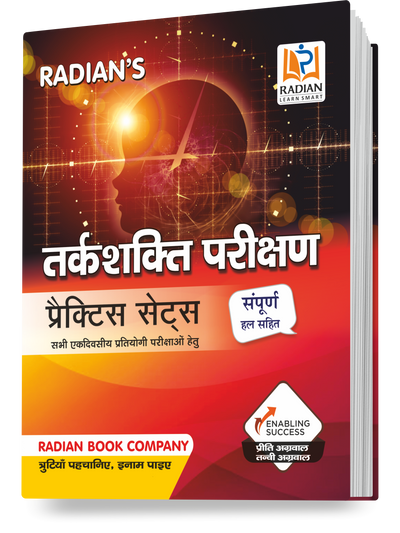
Tarkshakti Parikshan (Verbal, Non-Verbal & Logical) | 2023 Hindi Practice Set | All Exams
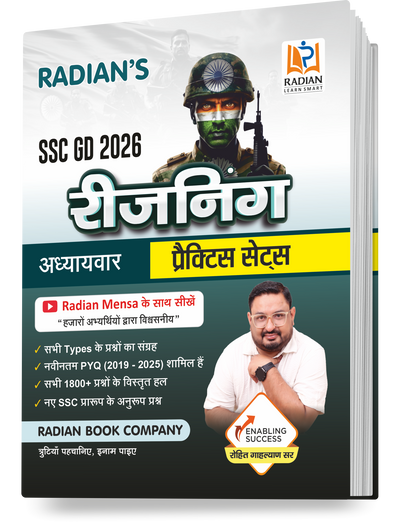
SSC GD 2026 Reasoning Practice Set Book | Reasoning Chapterwise Solved PYQs | Hindi Medium