Most Repeated GK Questions for SSC and Government Exams 2026


General Knowledge (GK) plays a crucial role in almost every competitive exam in India, including SSC, Railway, Defence, Banking, and State-level exams. A strong command of GK helps candidates score quickly because GK questions usually require less time and no calculations.
General Knowledge is an important part of many competitive and government examinations. Questions from Indian History, Geography, Indian Polity, General Science, Economy and Static GK can appear in exams such as SSC, Railway, Defence and other government recruitment examinations.
Some GK topics are especially useful for revision because the same facts and concepts are asked repeatedly in different forms. Knowing these facts can help students save time during the exam and improve their accuracy.
To make revision easier, we have compiled a useful set of most repeated GK questions for SSC and government exams, based on the question bank provided for this article. The questions cover important facts from History, Geography, Polity, Science and other areas of General Knowledge.
Most Repeated GK Questions with Answers
Indian History GK Questions
1. Who founded the Brahmo Samaj?
Answer: Raja Ram Mohan Roy
2. Who wrote the book Indica?
Answer: Megasthenes
3. Who founded the Slave Dynasty in India?
Answer: Qutb-ud-din Aibak
4. Who was the first President of the Indian National Congress?
Answer: W.C. Bonnerjee
5. Who built the Brihadeeswara Temple at Thanjavur?
Answer: Rajaraja Chola I
6. Who founded the Vijayanagara Empire?
Answer: Harihara I and Bukka Raya I
7. Who founded the Arya Samaj?
Answer: Swami Dayanand Saraswati
8. Who founded the Maratha Kingdom?
Answer: Shivaji Maharaj
9. Who wrote Akbarnama?
Answer: Abul Fazl
10. Who introduced the Mansabdari system in the Mughal Empire?
Answer: Akbar
11. Who was known as the “Napoleon of India”?
Answer: Samudragupta
12. Who was the founder of the Gupta dynasty?
Answer: Sri Gupta
13. Who was the first woman ruler of the Delhi Sultanate?
Answer: Razia Sultan
14. Who founded the Ramakrishna Mission?
Answer: Swami Vivekananda
15. The First Battle of Panipat was fought in which year?
Answer: 1526
16. The Kalinga War was fought in which year?
Answer: 261 BCE
17. Who founded the Aligarh Movement?
Answer: Sir Syed Ahmad Khan
18. Who founded the Mauryan Empire?
Answer: Chandragupta Maurya
19. Which treaty ended the First Anglo-Maratha War?
Answer: Treaty of Salbai
20. Who introduced the Iqta system in the Delhi Sultanate?
Answer: Iltutmish
21. Who founded the Indian National Congress?
Answer: Allan Octavian Hume
22. Who founded the Mughal Empire in India?
Answer: Babur
23. Who ordered the firing at Jallianwala Bagh?
Answer: General Reginald Dyer
24. Who embraced Buddhism after the Kalinga War?
Answer: Ashoka
Indian Freedom Movement GK Questions
Questions related to India's freedom struggle are important for competitive exams. Pay special attention to movements, important years, leaders and famous slogans.
25. The Partition of Bengal took place in which year?
Answer: 1905
26. Who gave the slogan “Do or Die”?
Answer: Mahatma Gandhi
27. The Quit India Movement was launched in which year?
Answer: 1942
28. Who launched the Home Rule Movement in India along with Annie Besant?
Answer: Bal Gangadhar Tilak
29. The Jallianwala Bagh massacre took place in which year?
Answer: 1919
30. The Dandi March was associated with which movement?
Answer: Civil Disobedience Movement
31. Who gave the slogan “Give me blood, and I will give you freedom”?
Answer: Subhas Chandra Bose
32. Who gave the slogan “Swaraj is my birthright and I shall have it”?
Answer: Bal Gangadhar Tilak
33. The Non-Cooperation Movement was launched in which year?
Answer: 1920
34. Who was the last Viceroy of British India?
Answer: Lord Mountbatten
35. Who was the first Governor-General of independent India?
Answer: Lord Mountbatten
36. Who was the first Indian Governor-General of India?
Answer: C. Rajagopalachari
Indian Geography GK Questions
Indian Geography is another important area for SSC and government exams. Questions often focus on rivers, lakes, soils, mountains, states and geographical features.
37. Which Indian state has the longest coastline?
Answer: Gujarat
38. Which is the largest freshwater lake in India?
Answer: Wular Lake
39. Which river is known as the “Sorrow of Bihar”?
Answer: Kosi
40. Which soil is most suitable for cotton cultivation?
Answer: Black soil
41. Which type of soil is formed mainly by river deposits?
Answer: Alluvial soil
42. Which is the highest peak entirely within India?
Answer: Kangchenjunga
43. Which river is known as the “Dakshin Ganga”?
Answer: Godavari
44. Which is the largest river island in India?
Answer: Majuli
45. Which Indian river flows through a rift valley?
Answer: Narmada
46. Which pass connects Srinagar with Leh?
Answer: Zoji La
47. Which is the largest saltwater lake in India?
Answer: Chilika Lake
48. Which mountain range separates the Deccan Plateau from the coastal plains?
Answer: Western Ghats
49. Which Indian state is known as the “Land of Rising Sun”?
Answer: Arunachal Pradesh
50. Which is the longest river flowing entirely within India?
Answer: Godavari
51. Which is higher on average, the Western Ghats or the Eastern Ghats?
Answer: Western Ghats
52. Which Indian state contains Majuli?
Answer: Assam
53. Which is the southernmost point of India?
Answer: Indira Point
54. Which island is home to Indira Point?
Answer: Great Nicobar Island
55. Which river originates near Amarkantak?
Answer: Narmada
56. Which is the largest continent by area?
Answer: Asia
57. Which is the smallest continent by area?
Answer: Australia
Indian Polity GK Questions
Indian Polity is a high-value section for competitive exams. Questions from Fundamental Rights, Constitutional Articles, Parliament, President and constitutional amendments are particularly useful for revision.
58. Which Article guarantees equality before law?
Answer: Article 14
59. Which Article is known as the “Right to Constitutional Remedies”?
Answer: Article 32
60. Who called Article 32 the “heart and soul” of the Constitution?
Answer: Dr B.R. Ambedkar
61. Which Article guarantees the Right to Life and Personal Liberty?
Answer: Article 21
62. When was the Constitution of India adopted?
Answer: 26 November 1949
63. When did the Constitution of India come into force?
Answer: 26 January 1950
64. Who is the ex-officio Chairman of the Rajya Sabha?
Answer: Vice-President of India
65. Who appoints the Prime Minister of India?
Answer: President
66. Which House of Parliament is a permanent House?
Answer: Rajya Sabha
67. What is the maximum strength of the Rajya Sabha?
Answer: 250
68. What is the maximum elected strength of the Lok Sabha under the Constitution?
Answer: 550
69. Which constitutional amendment reduced the voting age from 21 to 18 years?
Answer: 61st Constitutional Amendment
70. Which amendment added the words “Socialist”, “Secular” and “Integrity” to the Preamble?
Answer: 42nd Constitutional Amendment
71. Which part of the Constitution deals with Fundamental Rights?
Answer: Part III
72. Which part of the Constitution contains the Directive Principles of State Policy?
Answer: Part IV
73. Which part of the Constitution contains Fundamental Duties?
Answer: Part IVA
74. How many Fundamental Duties are there at present?
Answer: 11
75. Who is the constitutional head of the Union?
Answer: President
76. Who is the real executive head of the Union government?
Answer: Prime Minister
77. Who is known as the chief architect of the Indian Constitution?
Answer: Dr B.R. Ambedkar
78. Who is known as the “Father of the Indian Constitution”?
Answer: Dr B.R. Ambedkar
79. Which constitutional amendment abolished Anglo-Indian nominated seats in the Lok Sabha and State Assemblies?
Answer: 104th Constitutional Amendment
General Science GK Questions
Science questions are common in SSC, Railway, Defence and other government examinations. Revise basic facts from Physics, Chemistry, Biology and human health.
80. Which is the largest planet in the Solar System?
Answer: Jupiter
81. Which planet is known as the “Red Planet”?
Answer: Mars
82. Which planet has the shortest year?
Answer: Mercury
83. What is the SI unit of force?
Answer: Newton
84. What is the SI unit of electric current?
Answer: Ampere
85. What is the SI unit of power?
Answer: Watt
86. Which gas is most abundant in Earth's atmosphere?
Answer: Nitrogen
87. Which gas is essential for photosynthesis?
Answer: Carbon dioxide
88. Which vitamin is mainly produced in the human body through exposure to sunlight?
Answer: Vitamin D
89. Which vitamin deficiency causes rickets?
Answer: Vitamin D
90. Who discovered penicillin?
Answer: Alexander Fleming
91. Which instrument measures atmospheric pressure?
Answer: Barometer
92. Which instrument is used to measure earthquakes?
Answer: Seismograph
93. Which is the hardest natural substance?
Answer: Diamond
94. Which organ helps filter waste products from the blood?
Answer: Kidneys
95. Which blood group is considered the universal donor for red blood cells?
Answer: O negative
Economy and Banking GK Questions
Basic economic and banking concepts are also useful for government exam preparation.
96. What is the full form of GST?
Answer: Goods and Services Tax
97. Which tax replaced several indirect taxes in India in 2017?
Answer: Goods and Services Tax (GST)
98. What is inflation?
Answer: A sustained rise in the general price level of goods and services
99. What is the full form of GDP?
Answer: Gross Domestic Product
100. Which institution replaced the Planning Commission?
Answer: NITI Aayog
101. In which year was NITI Aayog established?
Answer: 2015
102. What is the full form of RBI?
Answer: Reserve Bank of India
103. Where is the headquarters of the Reserve Bank of India located?
Answer: Mumbai
104. Which denomination of currency note is issued by the Government of India rather than the RBI?
Answer: ₹1 note
Static GK Questions for Competitive Exams
Static GK includes facts that remain useful for exam preparation over a long period. These questions are good for quick revision.
105. Which is the deepest ocean trench in the world?
Answer: Mariana Trench
106. Which is the largest ocean on Earth?
Answer: Pacific Ocean
107. Which ocean is the largest in the world?
Answer: Pacific Ocean
108. What is the largest freshwater lake in India?
Answer: Wular Lake
109. Which country is associated with the “Land of Thunder Dragon”?
Answer: Bhutan
110. Which Indian state is known as the “Land of Five Rivers”?
Answer: Punjab
111. What is the SI unit of temperature?
Answer: Kelvin
112. Which denomination of currency was the first paper currency issued by the RBI?
Answer: ₹5 note
113. Which sector includes agriculture, forestry and fishing?
Answer: Primary sector
114. Which is the first Indian ruler to issue gold coins on a large scale?
Answer: Kushanas
Important GK Facts for Quick Revision
Before an examination, students can revise the following facts quickly:
|
Topic |
Answer |
|
Largest planet |
Jupiter |
|
Red Planet |
Mars |
|
Shortest planetary year |
Mercury |
|
Largest ocean |
Pacific Ocean |
|
Largest continent |
Asia |
|
Smallest continent |
Australia |
|
Hardest natural substance |
Diamond |
|
SI unit of force |
Newton |
|
SI unit of current |
Ampere |
|
SI unit of power |
Watt |
|
SI unit of temperature |
Kelvin |
|
Universal donor for red blood cells |
O negative |
|
Sorrow of Bihar |
Kosi |
|
Sorrow of Bengal |
Damodar |
|
Dakshin Ganga |
Godavari |
|
Largest river island in India |
Majuli |
|
Southernmost point of India |
Indira Point |
|
Land of Rising Sun in India |
Arunachal Pradesh |
|
Pink City |
Jaipur |
|
Father of Indian Constitution |
Dr B.R. Ambedkar |
How to Prepare GK for SSC and Government Exams
Preparing GK does not mean memorising everything at once. A better approach is to divide the syllabus into smaller topics and revise them regularly.
1. Start with Static GK
Focus first on subjects such as History, Geography, Polity and General Science. These areas provide a strong foundation for competitive exam preparation.
2. Practise Questions Regularly
Solve a fixed number of GK questions every day. After completing a topic, revisit the questions you got wrong.
3. Make Short Revision Notes
Write down important dates, Articles, personalities, places, rivers and scientific facts. These notes can be useful for quick revision before the examination.
4. Revise Repeatedly
GK improves with repeated revision. Instead of studying a topic once, revise it at regular intervals.
5. Use Practice Sets and Previous-Year Questions
Previous-year questions can help you understand the type of facts generally tested in competitive examinations.
Why Are Repeated GK Questions Important?
Competitive exams often test basic facts from familiar areas of General Knowledge. A question may not always appear in exactly the same wording, but the underlying fact or concept can be tested again.
For example, students may encounter different questions about Article 32, the Dandi March, the Kalinga War, Indian rivers or constitutional amendments.
Therefore, practising repeated and frequently tested GK topics can make revision more focused.
Final Words
These most repeated GK questions for SSC and government exams cover important areas of History, Geography, Indian Polity, Science, Economy and Static GK. They are useful for quick revision and regular practice.
Students preparing for SSC, Railway, Defence and other government examinations should combine question practice with revision, previous-year papers and reliable study material.
Keep revising important facts, practise questions regularly and track the topics where you make mistakes. Consistent revision can make GK preparation much easier.
Frequently Asked Questions
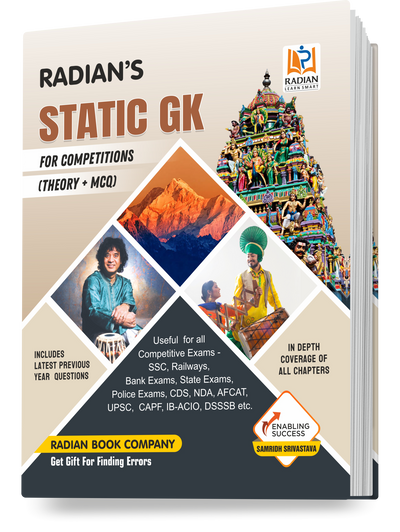
Static GK Theory & MCQs (2025) | English Edition | Includes Latest Previous Year Questions
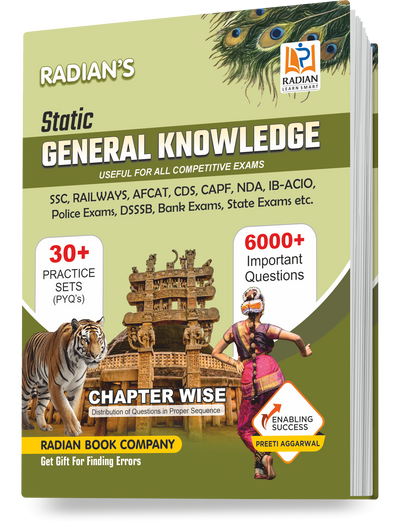
Static General Knowledge Book 2026 | English | SSC, Bank, Railway, Police & All Other Exams
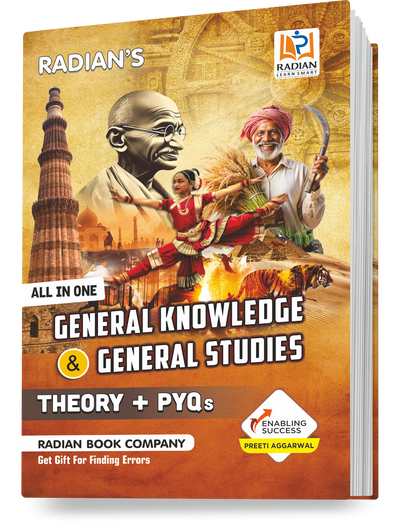
General Knowledge & General Studies Book | Theory + PYQs All Competitive Exams| 2025 English